

Odor vs. Fragrance in Real Estate Showings
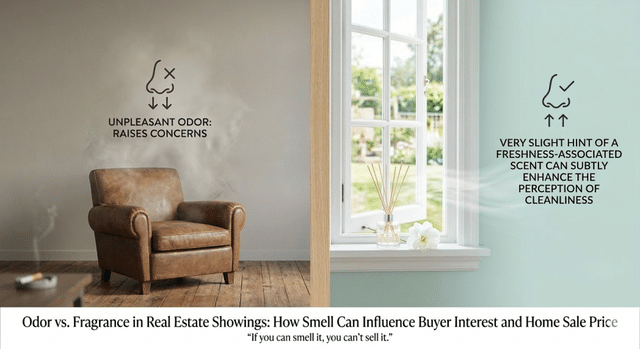
How Smell Can Influence Buyer Interest and Home Sale Price
“If you can smell it, you can’t sell it.”
I often share this simple statement with real estate agents when we talk about preparing homes for showings. It’s a straightforward phrase, but it carries a lot of truth. Over the years, I’ve seen how something as subtle as a smell can shape a buyer’s entire perception of a property. Buyers may not always comment on it directly, but scent has a powerful influence on how a home feels the moment someone walks through the door.
That single sentence is actually what inspired me to write this blog. I wanted to explain why smell matters so much during real estate showings and how both odors and fragrances can influence buyer behavior. Whether you are a realtor guiding a client, a seller preparing your home for the market, or a buyer walking into a property for the first time, understanding how scent affects perception can make a meaningful difference in the outcome of a sale.
When preparing a home for sale, most sellers focus on the obvious details. They clean, declutter, stage furniture, and improve curb appeal. While these steps are important, one critical factor is often overlooked during real estate showings: how the home smells. The difference between an odor and a fragrance, and how buyers interpret both, can significantly influence buyer interest, perception of the property, and even the final sale price.
Smell is one of the first things buyers notice when they walk into a home. Unlike visual details that buyers consciously evaluate, scent triggers immediate emotional and psychological reactions. Whether a smell is interpreted as an odor or a fragrance can shape how buyers feel about the property within seconds.
Understanding this difference can help sellers avoid common mistakes that unintentionally reduce interest in their home.
Understanding the Difference Between Odor and Fragrance
An odor is simply any smell present in an environment. Technically, odors can be pleasant, neutral, or unpleasant. However, in real estate showings, the word odor is usually associated with smells that raise concerns for buyers. These may include pet odors, mildew, smoke, cooking residue, or stale air that has accumulated over time.
When buyers detect an odor in a home, their attention immediately shifts to identifying the source. A musty smell may cause them to worry about mold or water damage. Smoke odors can suggest long-term cigarette use that may be embedded in walls, carpets, or ventilation systems. Pet odors may raise questions about cleanliness and maintenance.
Even if the issue is minor, the perception of a potential problem can quickly change how buyers evaluate the property.
A fragrance, on the other hand, is a pleasant smell that is intentionally introduced into a space. Candles, air fresheners, scented cleaning products, and plug-in scent devices are often used by homeowners to create a welcoming atmosphere during showings.
Many sellers believe that filling the home with comforting scents such as vanilla, cinnamon, or fresh linen will make buyers feel more relaxed and connected to the space. While the intention is understandable, fragrance can sometimes create unintended consequences during a showing.
The Real Estate Psychology of Smell
Scent has a powerful connection to the human brain. It interacts directly with the limbic system, which controls memory and emotion. Because of this connection, smell can influence how buyers emotionally experience a property before they consciously evaluate the layout or features.
In many cases, buyers form an impression of a home within seconds of entering it, and scent is often the first factor influencing that perception.
If a home smells fresh and neutral, buyers tend to interpret the property as clean, well maintained, and move-in ready. However, if they encounter noticeable odors, their attention immediately shifts away from the home’s features and toward the potential problem they believe they smell.
Statistics: How Odors Can Affect Buyer Behavior and Price Offers
Research and surveys within the real estate industry show that odor can have a measurable impact on buyer interest and home value.
According to industry surveys cited by real estate marketing and home preparation resources, approximately 80 percent of buyers say they are less interested in homes with noticeable odors, including smells from pets, smoke, or strong cooking. (Source: Unbiased Options housing market research and real estate buyer surveys.)
In more severe situations, odors can significantly reduce a home's value. Realtor.com reports that homes with persistent cigarette smoke odors can sell for up to 30 percent less than comparable homes without smoke contamination because buyers expect the cost of remediation, repainting, flooring replacement, and ventilation cleaning. (Source: Realtor.com homebuyer advisory research.)
Additionally, the Real Estate Staging Association has reported that homes that are professionally cleaned and properly prepared often sell for 6 to 10 percent more than homes that are not, and eliminating odors is a major part of that preparation. (Source: Real Estate Staging Association market data.)
These statistics highlight an important reality. Buyers may not always mention smell directly, but it can strongly influence whether they make an offer and how much they are willing to pay.
Why Strong Fragrances Can Also Raise Concerns
While unpleasant odors can hurt a showing, strong fragrances can also create problems. Many experienced real estate agents advise sellers to avoid heavy scents during showings because buyers often interpret them as an attempt to mask underlying odors.
When buyers walk into a home that smells strongly of candles, plug-in air fresheners, or heavily scented cleaners, it can trigger suspicion. Instead of thinking the home smells pleasant, buyers may begin to wonder if the fragrance is covering up pet odors, smoke, or mildew.
Modern buyers are cautious, and anything that feels artificial or staged can make them question the property’s condition.
Fragrance preferences are also highly personal. A scent that one person finds warm and inviting may feel overwhelming to someone else. Some buyers may even have sensitivities to strong fragrances due to allergies or respiratory issues. In those cases, a heavily scented home can actually shorten the showing experience.
The Role of Subtle Cleanliness Scents
Although strong fragrances can create suspicion, a slight introduction of a fragrance associated with cleanliness can sometimes enhance the buyer experience. The key word is slight.
A faint hint of freshness can reinforce the perception that the home is clean and well cared for. Light scents commonly associated with cleanliness, such as a very mild citrus or fresh linen note, can subtly support the impression of a freshly cleaned home.
However, the fragrance should never be noticeable enough to draw attention. If buyers consciously recognize the scent, it is likely too strong.
Ideally, the home should simply smell neutral, fresh, and well ventilated.
Creating the Ideal Scent Environment for Home Showings
For successful real estate showings, the best strategy is to eliminate odors at their source rather than attempting to mask them with fragrance. Deep cleaning carpets, upholstery, and curtains can remove smells that accumulate over time. Proper ventilation can also help reduce lingering indoor odors.
If stronger odors exist, professional odor removal or deodorization services may be worth considering before listing the property. Addressing the root cause of a smell can dramatically improve buyer confidence.
The goal is simple. Buyers should notice the home itself, not the scent inside it.
How Smell Influences Buyer Interest and Sale Price
In real estate, small details can have major financial consequences. Odors can create doubts about maintenance, while strong fragrances can raise suspicions about hidden problems. Both situations can reduce buyer interest and weaken negotiating power.
When buyers feel uncertain, they often submit lower offers or move on to other properties. Even when a home has strong visual appeal, scent can quietly shape the overall impression buyers carry with them after the showing.
A clean, neutral-smelling environment allows buyers to focus on the property’s features, imagine themselves living in the space, and develop an emotional connection to the home.
When scent is handled correctly, it becomes an invisible advantage that supports the home’s presentation rather than distracting from it.
For sellers preparing for real estate showings, understanding the balance between odor, fragrance, and freshness can make a meaningful difference in attracting buyers and achieving the best possible sale price.