

Why Odors Seem Stronger in Warm, Humid Environments
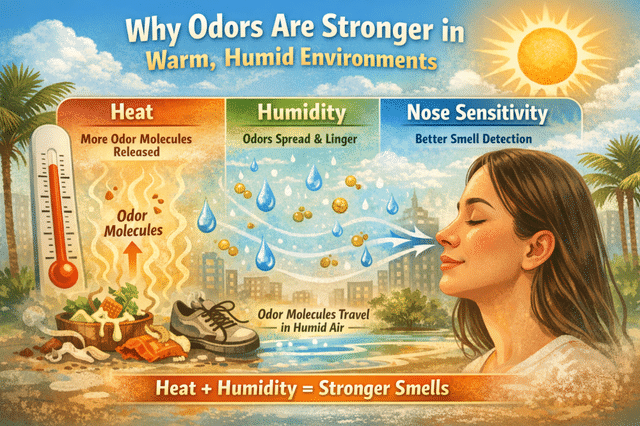
If you have ever walked into a room on a hot, sticky day and immediately noticed a strong smell, you are not imagining things. Whether it is the scent of garbage, food, sweat, or even perfume, odors tend to feel much more intense when the air is warm and humid. This is something many people experience, especially during summer months, but few stop to think about why it happens.
The truth is that there is a simple and fascinating scientific explanation behind it. Understanding why odors are stronger in warm, humid environments can help you better manage smells in your home, workplace, or business.
The Science Behind Smell
To understand why odors behave differently in certain conditions, it helps to first know how smell works. Every odor you detect comes from tiny molecules released by a substance. These molecules travel through the air and enter your nose, where they interact with receptors that send signals to your brain. Your brain then interprets these signals as specific smells.
The strength of any odor depends on how many of these molecules reach your nose and how easily your body can detect them. Temperature and humidity both play a big role in this process.
Why Heat Makes Smells Stronger
Warm temperatures increase the energy of molecules. When something is heated, the molecules inside it start moving faster. This increased movement makes it easier for odor molecules to escape into the air.
For example, think about food cooking on a stove. When it is hot, you can smell it from across the room. When it cools down, the smell becomes less noticeable. The same principle applies to trash, dirty laundry, or any other odor source. Heat speeds up the release of odor molecules, which means more of them enter the air at once.
This is one of the main reasons why unpleasant smells seem stronger during the summer. Higher temperatures mean more evaporation and more odor particles floating around.
How Humidity Amplifies Odors
Humidity refers to the amount of moisture in the air. When the air is humid, it contains more water vapor. This moisture affects how odor molecules move and linger.
In humid conditions, odor molecules tend to stay suspended in the air longer. Instead of dispersing quickly, they hang around and spread more evenly throughout a space. This makes smells feel stronger and more noticeable.
Moisture can also interact with surfaces, allowing odor causing compounds to cling and then be released slowly over time. This is why damp areas like basements, bathrooms, and kitchens often have persistent smells, especially when ventilation is poor.
Why Your Nose Detects More in Humid Air
Another important factor is how your body responds to humidity. Your sense of smell works best when your nasal passages are slightly moist. In dry air, your nose can become dry as well, making it harder for odor molecules to dissolve and be detected.
In humid air, your nasal passages stay more hydrated. This makes it easier for odor molecules to interact with your smell receptors, which can increase your sensitivity to odors. As a result, even smells that might normally go unnoticed can seem stronger.
The Combined Effect of Heat and Humidity
When heat and humidity come together, their effects are amplified. Warm air releases more odor molecules, and humid air helps those molecules travel and linger. At the same time, your nose becomes more efficient at detecting them.
This combination is why certain environments can feel overwhelmingly smelly. Think about a crowded subway in the summer, a gym without proper ventilation, or a trash bin left outside on a hot day. All the conditions are in place for odors to become more intense.
Everyday Examples You Might Recognize
You have likely experienced this phenomenon in your daily life. Garbage smells stronger in the summer than in the winter. Damp towels left in a humid bathroom develop a noticeable odor more quickly. Even perfumes and air fresheners can seem more powerful when the air is warm and moist.
Restaurants and food vendors often rely on heat to enhance aromas, which can make food more appealing. On the other hand, poor ventilation in humid conditions can trap unwanted smells indoors, making them harder to ignore.
How to Reduce Odors in Warm, Humid Conditions
While you cannot control the weather, you can take steps to reduce how strong odors become in these environments. Keeping spaces cool can slow down the release of odor molecules. Air conditioning and fans can help circulate air and reduce buildup.
Reducing humidity is also important. Dehumidifiers, proper ventilation, and fixing moisture issues can make a big difference. Dry environments prevent odor molecules from lingering and make it harder for smells to intensify.
Regular cleaning is another key factor. Since heat accelerates odor release, removing the source of smells quickly is essential. This includes taking out trash frequently, washing fabrics, and cleaning surfaces that may trap moisture and bacteria.
Why This Matters for Homes and Businesses
Understanding how temperature and humidity affect odors is especially important for homeowners, property managers, and businesses. Strong odors can impact comfort, cleanliness, and even customer experience.
In environments like restaurants, gyms, offices, and rental properties, controlling smell is part of maintaining a pleasant atmosphere. By managing heat and humidity, you can reduce odor problems before they become overwhelming.
Frequently Asked Questions About Odors and Humidity
Why do smells seem worse in the summer than in the winter?
Smells are stronger in the summer because heat increases the release of odor molecules. At the same time, humidity helps those molecules stay in the air longer and makes it easier for your nose to detect them.
Does humidity always make odors stronger?
In most cases, yes. Humidity allows odor molecules to travel more easily and linger in the air. It also improves your sense of smell by keeping your nasal passages moist.
Why do damp areas smell musty?
Musty smells are often caused by mold and mildew, which thrive in moist environments. Humidity provides the perfect conditions for these organisms to grow and release odor causing compounds.
Can air conditioning reduce odors?
Yes, air conditioning can help reduce odors by lowering the temperature and removing some moisture from the air. This slows down the release of odor molecules and helps prevent them from building up.
Why does perfume smell stronger in humid weather?
Perfume evaporates more quickly in warm temperatures, releasing more scent into the air. Humidity then helps carry and hold those scent molecules, making the fragrance more noticeable.
How can I keep my home from smelling in humid weather?
Keeping your home clean, well ventilated, and dry is the best approach. Use fans, air conditioning, or dehumidifiers to control moisture and temperature, and remove odor sources regularly.
Final Thoughts
Odors seem stronger in warm, humid environments because of a combination of physical and biological factors. Heat increases the release of odor molecules, humidity helps them spread and linger, and your nose becomes more sensitive in moist conditions.
Once you understand this, it becomes much easier to manage odors in your everyday life. Whether you are dealing with household smells or trying to create a welcoming environment in a business, controlling temperature and humidity can make a noticeable difference.