
Is the Air Inside Your Home Dirtier Than the Air Outside? Here's How to Fix It
When most people think about air pollution, they picture traffic congestion, factory emissions, pollen, and smog. What many homeowners don't realize is that the air inside their home can often be more polluted than the air outside.
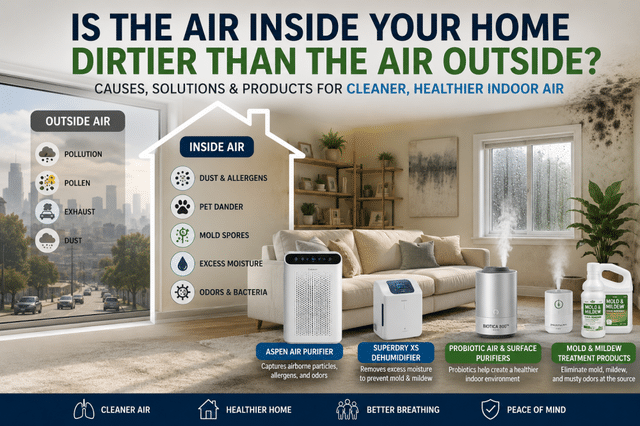
Modern homes are designed to be energy efficient. While that helps reduce heating and cooling costs, it also means that dust, allergens, moisture, odors, mold spores, pet dander, and airborne contaminants can become trapped indoors. Over time, these pollutants circulate through your HVAC system and settle into carpets, furniture, bedding, and other surfaces.
The result is a home that may look clean but still suffers from poor indoor air quality.
If you've noticed persistent dust, musty odors, allergy symptoms, or rooms that feel damp and stale, your indoor air may be telling you something. Fortunately, there are proven solutions that can help you create a healthier living environment.
Signs Your Indoor Air Quality Needs Attention
Many homeowners live with poor indoor air quality without realizing it. The symptoms often develop gradually and are easy to dismiss.
Common warning signs include:
- A musty or stale smell
- Excessive dust buildup
- Allergy symptoms that worsen indoors
- Frequent sneezing or congestion
- Condensation on windows
- Damp basement odors
- Mold or mildew growth
- Rooms that feel humid or stuffy
- Lingering pet or cooking odors
If any of these problems sound familiar, it's time to look beyond surface cleaning and address the underlying causes.
The Three Biggest Causes of Poor Indoor Air Quality
Most indoor air quality problems can be traced back to three primary issues: airborne contaminants, excess moisture, and microbial imbalance.
Airborne Contaminants
Dust, pollen, pet dander, mold spores, bacteria, and other microscopic particles continuously circulate throughout your home. Every time your HVAC system runs, these particles can be redistributed into the air you breathe.
Excess Moisture
Humidity is one of the biggest contributors to indoor air quality problems. High humidity levels encourage mold growth, dust mites, mildew, and musty odors.
Even if you cannot see mold, excess moisture creates the perfect conditions for it to develop behind walls, beneath flooring, inside crawl spaces, and throughout basements.
Microbial Imbalance
Many indoor environments contain odor-causing bacteria and microbes that settle on surfaces and fabrics. Traditional cleaning methods may remove some contaminants temporarily, but they often return if the underlying microbial environment remains unchanged.
Solution #1: Clean the Air with an Aspen Air Purifier
One of the most effective ways to improve indoor air quality is to remove airborne contaminants before they can circulate throughout your home.
The Aspen Air Purifier is designed to help homeowners reduce airborne particles that contribute to poor indoor air quality. Unlike many consumer-grade units that only provide limited coverage, the Aspen Air Purifier supports cleaner air throughout your living environment.
An effective air purifier can help reduce:
- Dust
- Pet dander
- Pollen
- Mold spores
- Airborne allergens
- Odor-causing particles
- General indoor air pollution
For families dealing with allergies, asthma, pets, or recurring dust problems, air purification is often the first step toward creating a healthier home.
However, air purification alone does not solve every indoor air quality issue.
Solution #2: Control Moisture Before Mold Takes Hold
Many homeowners focus on air purification while overlooking the role humidity plays in indoor air quality.
If humidity levels remain elevated, mold, mildew, bacteria, and dust mites can continue to thrive. Even the best air purifier cannot eliminate the source of these problems if excess moisture remains.
That's why humidity control is critical.
The SuperDry XS Dehumidifier helps remove excess moisture from indoor environments before it can contribute to mold growth and poor air quality.
Dehumidification is especially important in:
- Basements
- Crawl spaces
- Laundry rooms
- Coastal environments
- Homes with previous water damage
- Older homes with ventilation challenges
By maintaining proper humidity levels, homeowners can dramatically reduce the conditions that allow mold and mildew to flourish.
Many indoor air quality problems improve significantly once excess moisture is brought under control.
Solution #3: Improve Air and Surface Health with Probiotic Purification
Most homeowners think about air quality only in terms of airborne particles. The reality is that many contaminants live on surfaces as well.
Furniture, carpets, bedding, curtains, and countertops can all harbor odor-causing microbes and contaminants.
This is where probiotic purification technology offers a unique advantage.
The BioTica 800™ Probiotic Air & Surface Purifier continuously disperses beneficial probiotics throughout the environment to help support cleaner air and healthier surfaces.
For smaller spaces, travel, offices, or bedrooms, the BioLogic Mini™ Portable Probiotic Air & Surface Purifier provides similar benefits in a compact design.
Probiotic purification complements traditional filtration because it addresses areas that standard air purifiers cannot reach. Together, these technologies create a more comprehensive approach to indoor environmental wellness.
What If Mold Is Already Present?
If your home has a persistent musty smell, visible mold growth, or a history of water damage, air purification and dehumidification may not be enough.
Active mold growth requires source removal.
Mold colonies can develop behind walls, under flooring, inside attics, and within HVAC systems. Left untreated, mold can continue releasing spores into the air regardless of how many air purification devices are operating.
For homeowners dealing with mold concerns, Odor Supply House offers a complete collection of mold and mildew treatment products designed to help address contamination and odor issues at the source.
Combining mold treatment, moisture control, air purification, and probiotic support provides a much more effective strategy than relying on a single solution.
The Best Indoor Air Quality Strategy
The biggest mistake homeowners make is looking for one product that solves every problem.
Indoor air quality issues are usually caused by multiple factors working together.
A healthier home is achieved through a layered approach:
- Remove airborne contaminants with the Aspen Air Purifier.
- Control excess moisture with the SuperDry XS Dehumidifier.
- Support cleaner air and surfaces with probiotic purification.
- Address mold and mildew issues at their source.
- Maintain proper ventilation and HVAC filtration.
When these strategies work together, homeowners often notice cleaner air, fewer odors, reduced allergy symptoms, less dust accumulation, and a more comfortable living environment.
The Bottom Line
So, is the air inside your home dirtier than the air outside?
For many homes, the answer is yes.
Dust, allergens, mold spores, excess humidity, odors, and microbial contamination can all contribute to poor indoor air quality. Fortunately, these problems are manageable when you focus on the root causes instead of masking the symptoms.
By combining the Aspen Air Purifier, the SuperDry XS Dehumidifier, probiotic air and surface purification technologies, and targeted mold control solutions, homeowners can create a healthier indoor environment that supports comfort, wellness, and peace of mind.
Because cleaner air doesn't happen by accident. It happens when you take control of the conditions that affect the air you breathe every day.